where the name comes from
A farming estate, not a villa
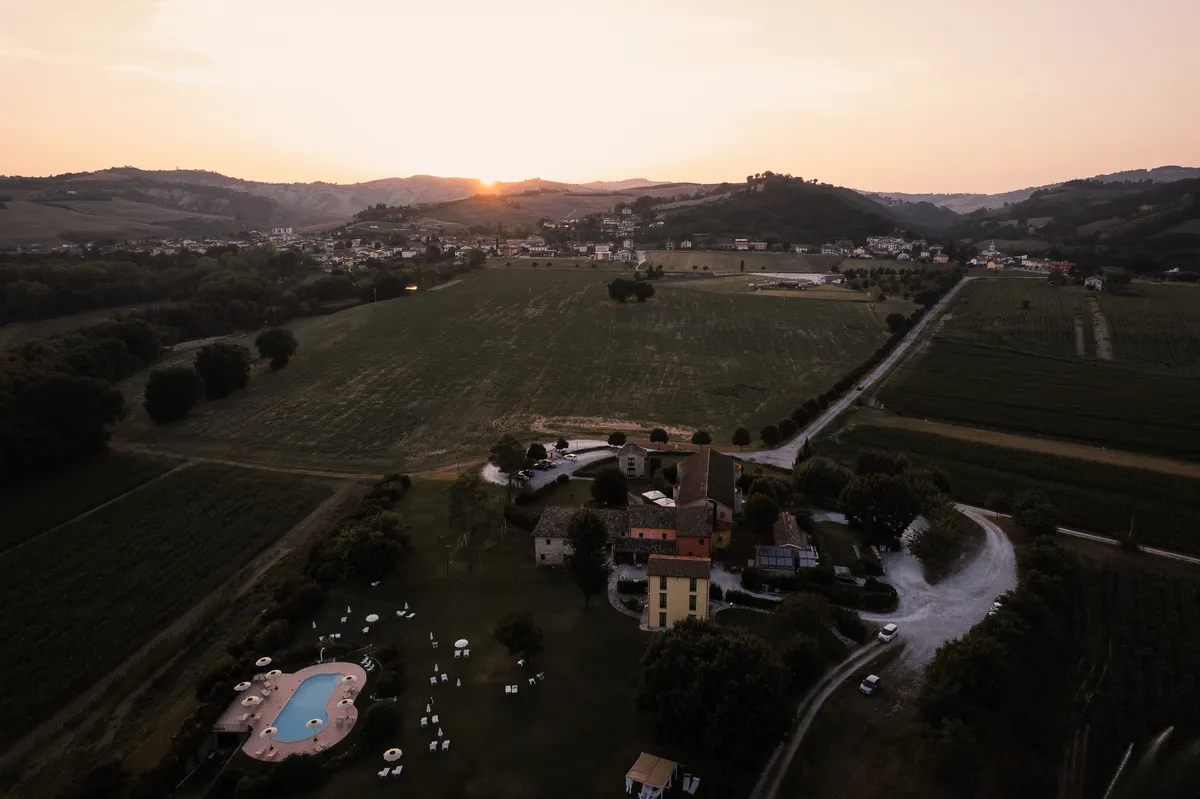
The farmhouse was born in the fifteenth century as a farm. It was not a stately building: the labourers who worked the land lived inside the property, and all around were the fields, the livestock and the stables.
In the fields they grew tobacco of the Virginia variety. Family tradition traces the name of the house back to that plant, which is also the name of the road that leads here.
The property belonged to a local landowner and stayed in her family for generations, until it was sold. It was bought by Marino and Giancarlo Rossi: that is where the part of the story we tell begins.
the house still speaks its own language
Every room has kept its trade
The names of the rooms and halls are not a marketing idea: they are the function those spaces had when the land was worked here.
| Today | Once |
|---|---|
| La Locanda, the restaurant | The cowshed |
| Suite Granaio | The grain store |
| Il Fienile — rooms and SPA | The hayloft |
| Suite Cannella | The bedroom of the lady of the house |
| La Tabaccaia | The tobacco-drying house |
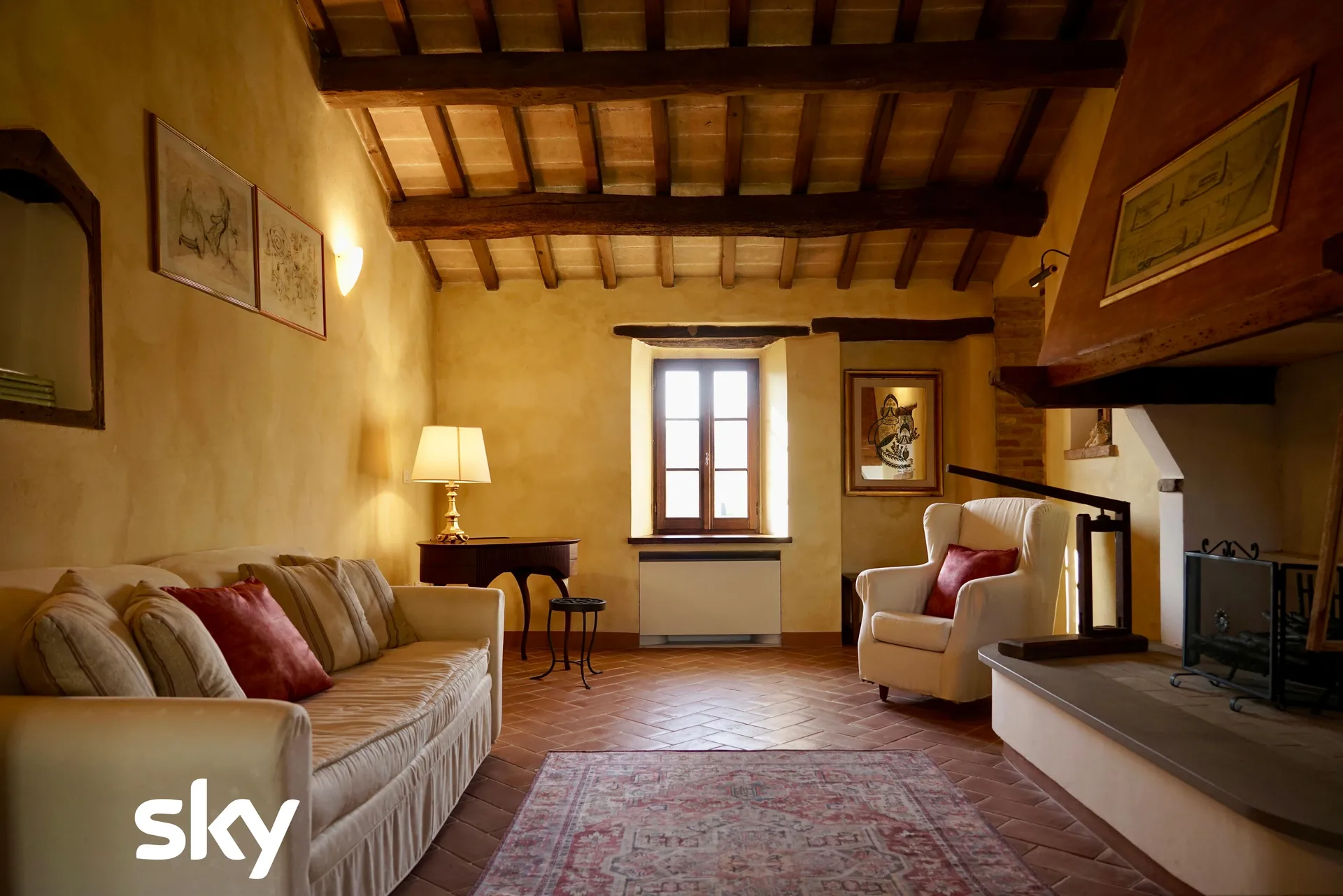
Cannella and Granaio are the manor quarters: the sleeping area was upstairs, warmed by two fireplaces to the left and right. On the other side of the farmhouse lived the labourers and farmers who kept the estate going.
a question we are often asked
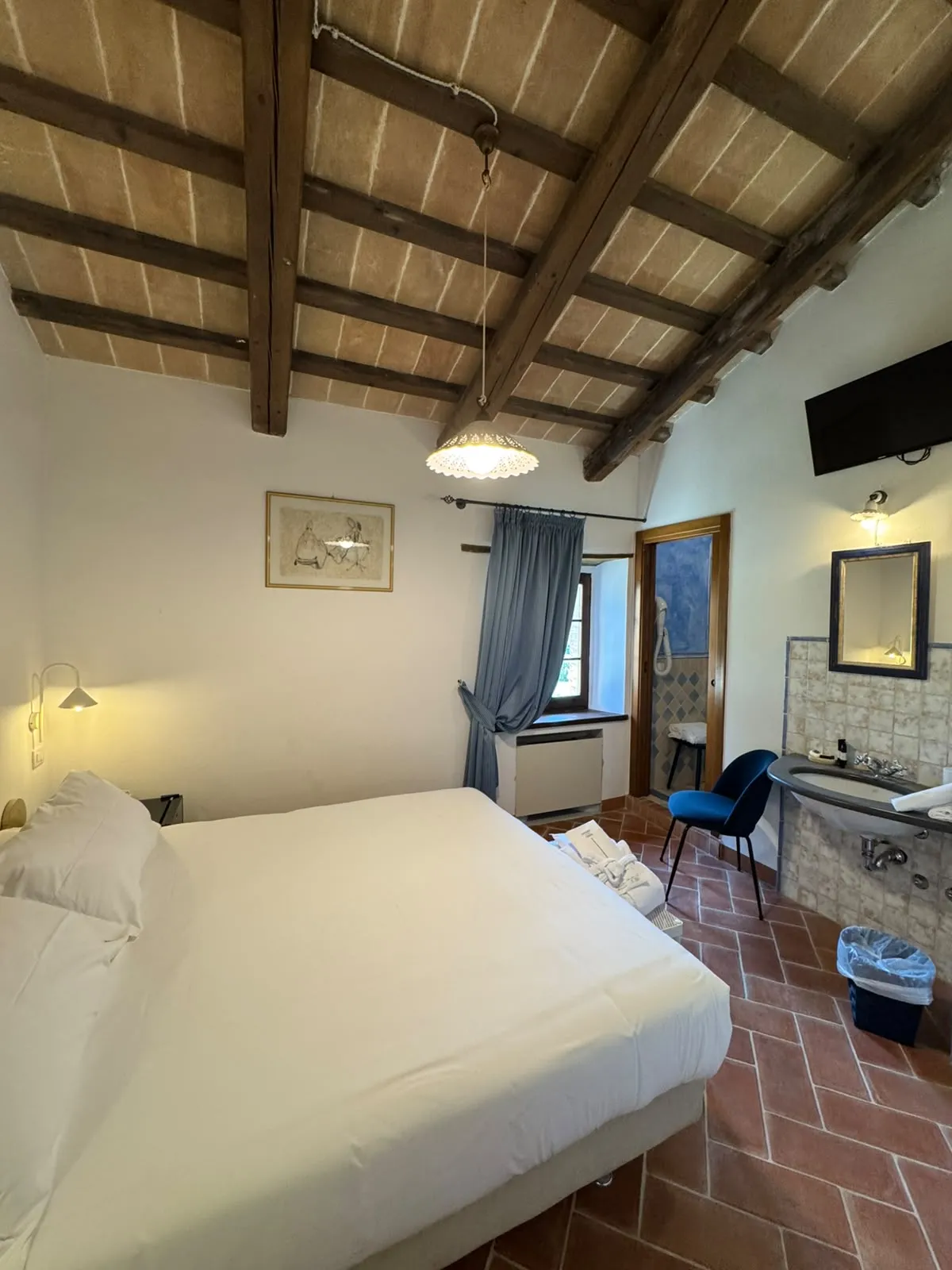
Why the washbasin stayed in the room
In the Rural Doubles the washbasin is in the bedroom, and new arrivals notice it straight away. It is not a furnishing choice: it is how things were, and the restoration left it where it was.
In a country house without plumbing, personal hygiene took place in the bedroom, with a basin and a jug; the same was true in noble palaces. The latrines were outside, separate, and for a full bath a wooden tub was brought into the room.
since 2004
How the farmhouse came back to life
-
A conservative restoration, not a reconstruction
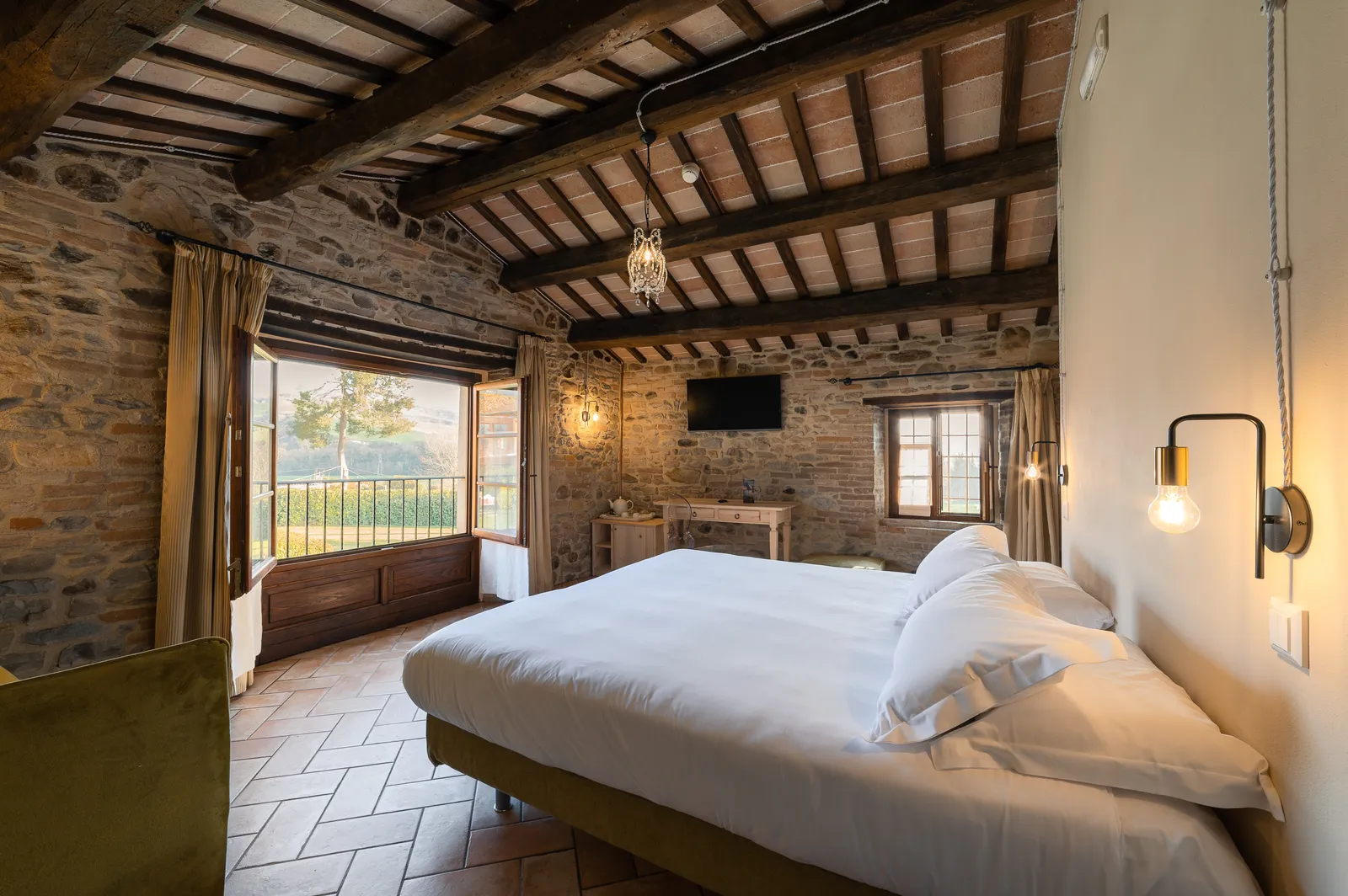
Work began in 2004 and brought the original materials back into view: exposed brick and stone, thick walls, vaulted arches, chestnut and oak beams, terracotta floors.
-
What was left untouched
The original doors stayed in place and the structure is brick, not reinforced concrete. It is the kind of charm that cannot be built anew.
-
Il Fienile, the exception
There, real structural work was needed. Today Il Fienile holds nine double rooms with exposed roof beams, and below them the 450 m² of the SPA.
-
The house today
Twenty-four rooms in seven categories, the restaurant in the historic wing, the Sala Il Convivio and Il Giardino Aromatico. A hundred hectares of woodland, clearings and streams all around.
green community area
Since 2008 the house powers itself
A 200 kWp photovoltaic system — the largest in the Marche when it was installed — powers the entire estate together with the geothermal field and solar thermal.
- Geothermal field 213 kW
- Solar thermal hot water
- Induction kitchen full-electric
- Electric car charging 2 × 11 kW, Type 2
- Surplus energy fed back into the grid
Every room has seasonal geothermal air conditioning: the system sends warmth in winter and cool air in summer, and in the room you adjust the temperature and the fan.
who you will find here
The Rossi family, every day
Ca' Virginia is owned by the Rossi family, and the family runs it in person, from the restoration onwards. Giacomo is the director and the bike guide: he represented the house on Bruno Barbieri's 4 Hotel, and in the evening he plans the next day's routes with those travelling in the saddle.
At reception you will find Federica, Laura and Francesca. The welcome we guarantee you is our simplicity: here you stay as if at home, with all the time you need.
Frequently asked questions about Ca' Virginia
How old is the Ca' Virginia farmhouse?
Its core is a fifteenth-century farmhouse, born as a farming estate. The conservative restoration that turned it into a country house began in 2004.
Where does the name Ca' Virginia come from?
Tobacco of the Virginia variety was grown in the surrounding fields. Family tradition traces the name of the house back to that plant, which is also the name of the road the estate stands on.
Why do some rooms have the washbasin in the bedroom?
Because that is how it was. In a country house without plumbing people washed in the bedroom, with a basin and a jug, and the latrines were outside. In the Rural Doubles the restoration kept that layout.
Is Ca' Virginia family-run?
Yes. The house belongs to the Rossi family, who run it directly: Giacomo Rossi is the director and the bike guide, and at reception you will find Federica, Laura and Francesca.
What does Green Energy Hotel mean?
That since 2008 the energy of the house has come from its own systems: a 200 kWp photovoltaic system, a 213 kW geothermal field, solar thermal and a full-electric induction kitchen. Surplus energy goes back into the grid, and in the courtyard there are two charging points for electric cars.